
Blogspot: Behind the Lens – A Love Affair with Color
Sept 3, 2025 – Manager of Marketing and Publications, Bailey Rafter
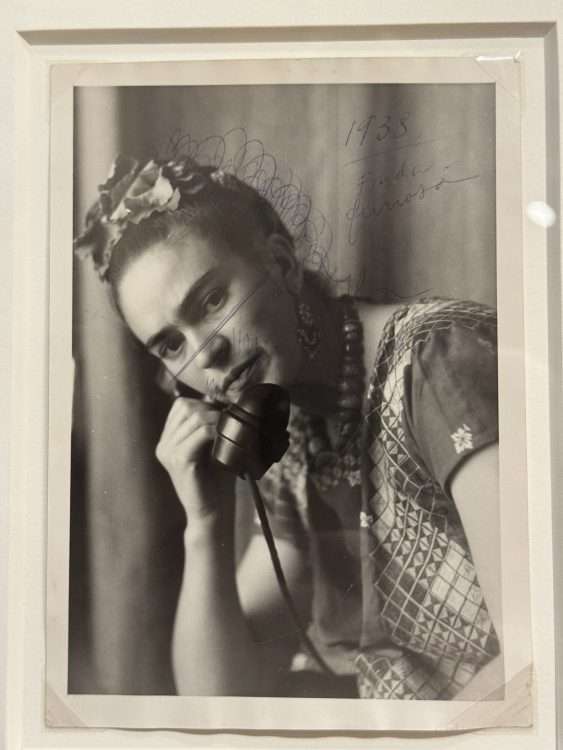
with ink alterations by Frida Kahlo, and, inscribed: 1938 Frida Furiosa
When we think of Frida Kahlo today, her image is almost as famous as her art. The braided hair adorned with flowers, the bold Tehuana clothes, the unflinching gaze—she is instantly recognizable, her likeness reproduced on everything from T-shirts to museum walls. That iconic image, however, was not only the result of her own carefully constructed self-presentation but also of the photographer Nickolas Muray, whose vibrant color portraits helped shape how U.S. audiences first encountered Kahlo. Their relationship—romantic, artistic, and collaborative—was rooted in a shared devotion to color as a form of expression.
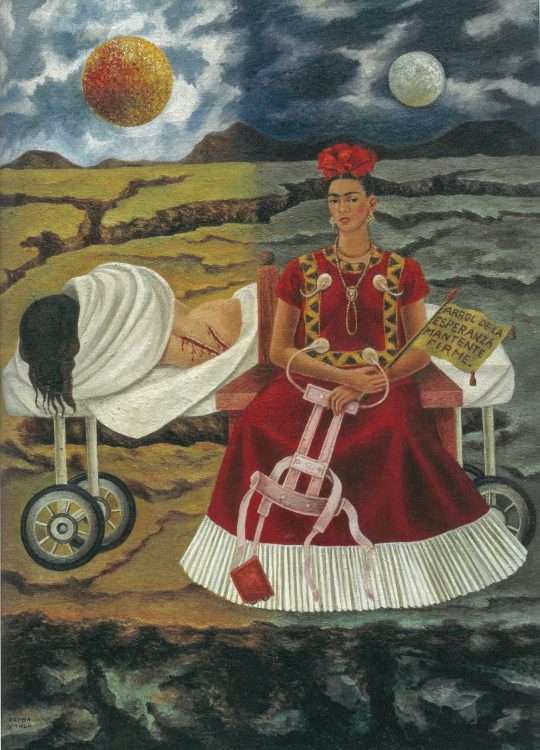
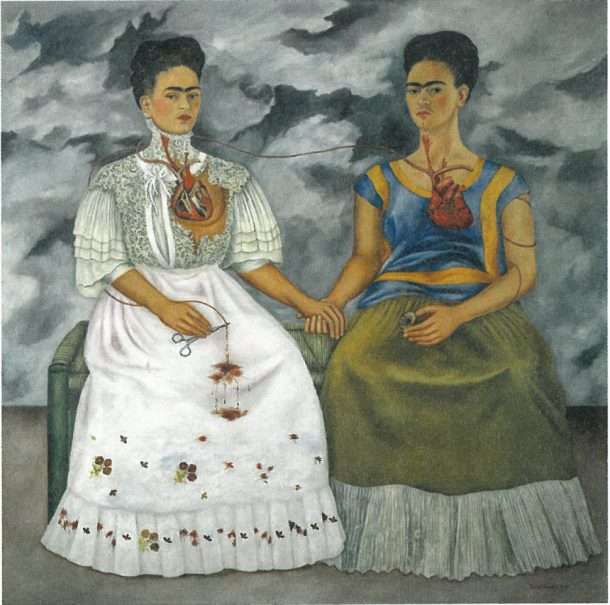
For Kahlo, color was never simply decoration; it was emotion, identity, and storytelling. Confined to bed as a teenager after a devastating bus accident, she taught herself to paint using a mirror fixed above her bed. Her self-portraits became both a way to study herself and a way to express what could not be spoken. Color was her vocabulary: reds became passion and blood, blues captured serenity and despair, greens and yellows tied her to the cycles of nature and decay. Across her canvases, color recorded a life marked by illness, heartbreak, and resilience, while also celebrating her cultural identity. Kahlo deliberately painted herself in bright indigenous clothing, borrowing from her mother’s Zapotec heritage, transforming her image into a political and personal declaration of Mexicanness.
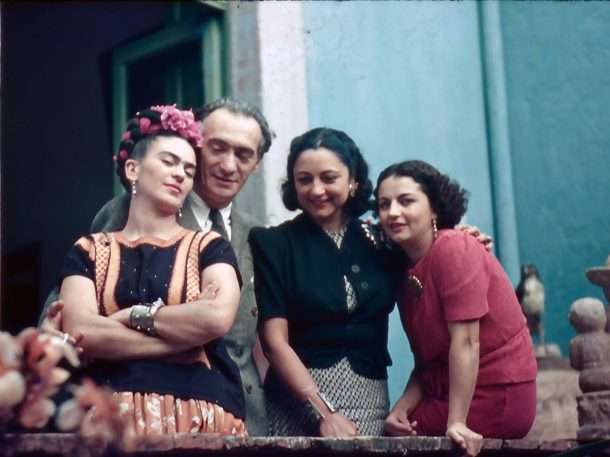
on the balcony of the Blue House, c. 1939, Photograph and Kodachrome film
When Nickolas Muray entered her life in 1931, he brought with him another kind of color. A Hungarian immigrant who fled antisemitism in Europe, Muray had reinvented himself in New York as one of the leading practitioners of commercial photography. His portraits of celebrities graced the pages of Vanity Fair, Harper’s Bazaar, and Ladies’ Home Journal. What set him apart was his mastery of the carbro process, an early form of color photography that produced luminous tones unlike anything people had seen before. Muray could make a background glow emerald green, turn a flower into a ruby-red flame, or capture the warmth of a subject’s skin with a depth previously unknown in photography.
Muray and Kahlo met in Mexico through mutual friends, and their attraction was immediate. Their love affair would stretch across a decade, even as Kahlo remained emotionally bound to Diego Rivera. With Muray, she found a partner who adored her openly, and with his camera, he created images that amplified the identity she had been constructing for herself since childhood. Growing up in the household of Guillermo Kahlo, her father and a successful photographer, Frida had learned early how to pose, retouch images, and understand the camera’s ability to shape perception. By the time Muray began photographing her, she was no passive subject but a collaborator who understood how to perform for the lens.
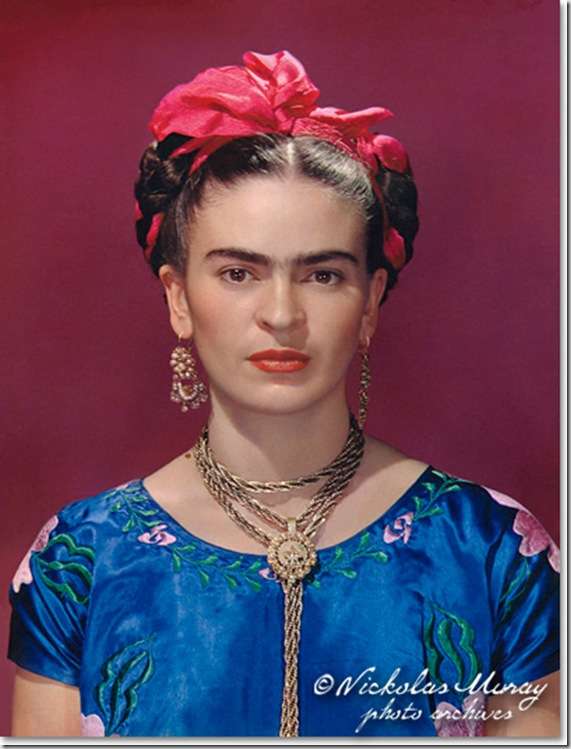
The results of their collaboration are among the most iconic images of Frida Kahlo. Muray’s portraits capture her wearing elaborately embroidered dresses, adorned with flowers and jewelry, her gaze steady and confrontational. Against backgrounds of vivid turquoise or lush greenery, her image radiates strength and beauty. These photographs differ from the stark black-and-white portraits taken by other contemporaries. Tina Modotti’s camera had revealed Kahlo’s politics, Carl Van Vechten’s photographs placed her within the artistic circles of New York, but Muray’s use of color made her image unforgettable. Where Kahlo’s canvases often confronted viewers with blood, scars, and raw emotion, Muray’s portraits offered an inviting counterpart, presenting her as glamorous, modern, and vibrantly alive.
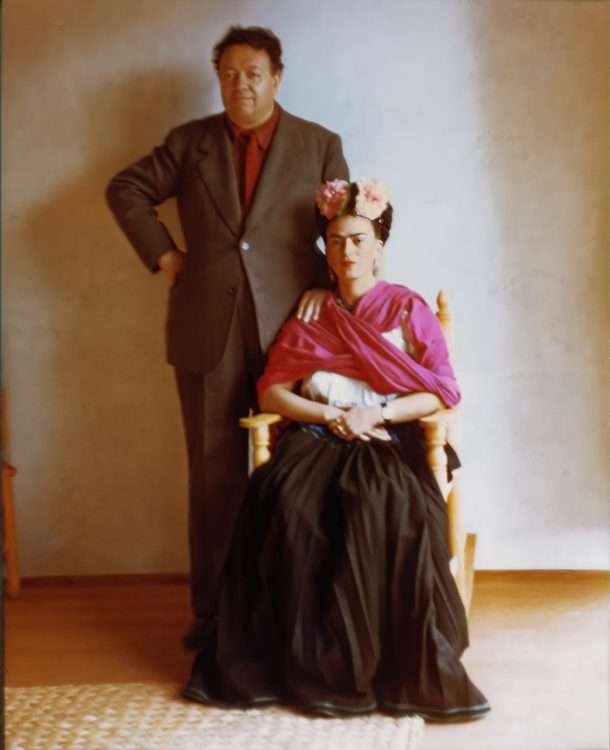
San Ángel, September 1941, Kodachrome photograph
In the United States, where Kahlo was often overshadowed by Rivera’s fame, Muray’s portraits played an essential role in how she was received. His images appeared in magazines and circulated in exhibitions, presenting her not merely as Diego Rivera’s wife but as an artist with her own presence and style. When she held her first solo show in New York in 1938, it was Muray’s photographs that had already prepared audiences to see her as more than a curiosity. His work helped bridge the gap between the intensely personal art she was creating and the way she was embraced as a cultural icon abroad.
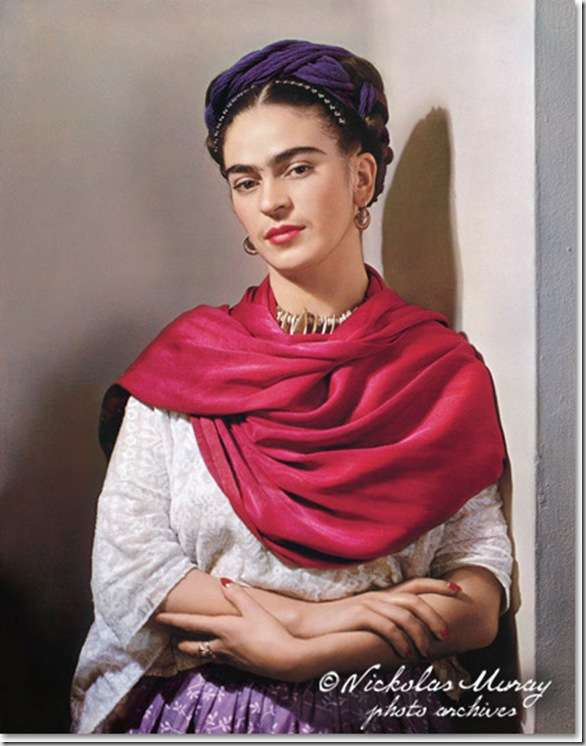
What makes the story of Kahlo and Muray compelling is the way their approaches to color reflect their individual sensibilities. For Kahlo, red was often blood, a reminder of her injuries and miscarriages; for Muray, red was lipstick, a flower, or a vibrant textile. She used color to make her pain visible, while he used it to heighten beauty and allure. Yet their differences only underscore the harmony of their collaboration. Together, they constructed a layered image of Frida Kahlo: the woman who painted her inner world of suffering and resilience, and the woman who projected a commanding, unforgettable presence through Muray’s lens.
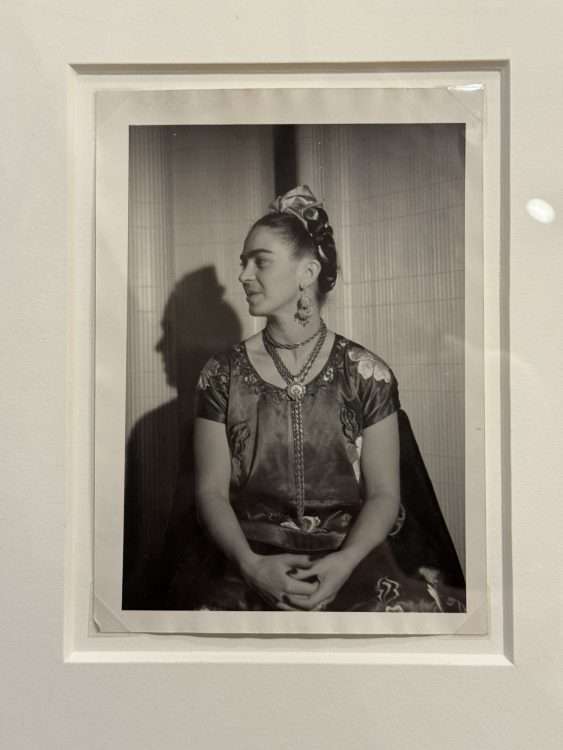
New York City, 1939, Gelatin silver print
Their love affair eventually ended, but their artistic bond endured. Muray continued to photograph her long after the romance had cooled, and those images remain some of the most widely reproduced portraits of Kahlo today. Alongside her self-portraits, Muray’s photographs form the twin pillars of her global image: the private, inner Frida who revealed herself on canvas, and the public, dazzling Frida immortalized in color photography. Without Muray, Kahlo’s image might not have traveled so widely and been so vividly etched into the American imagination. Without Kahlo, Muray’s color portraits might never have found their most unforgettable subject.
The story of Frida Kahlo and Nickolas Muray is ultimately a story about the power of image, collaboration, and the language of color. It reminds us that art is not created in isolation, but in the interplay of lives and visions. Kahlo painted her soul, Muray photographed her presence, and together they gave the world an icon whose image speaks as powerfully as her art.


